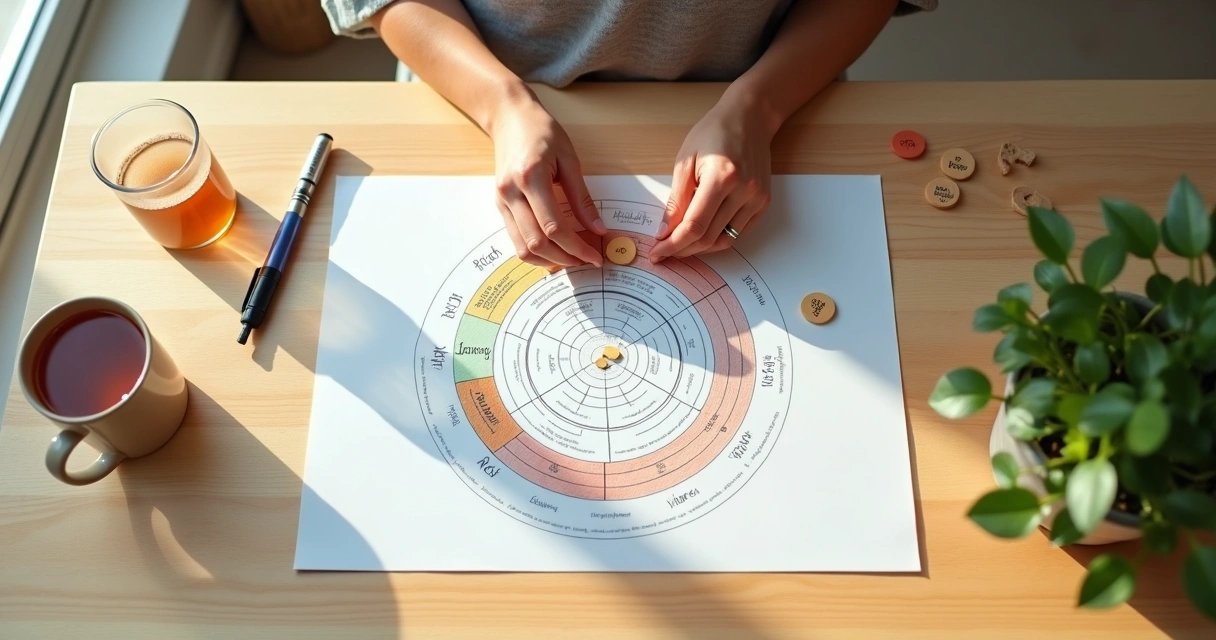
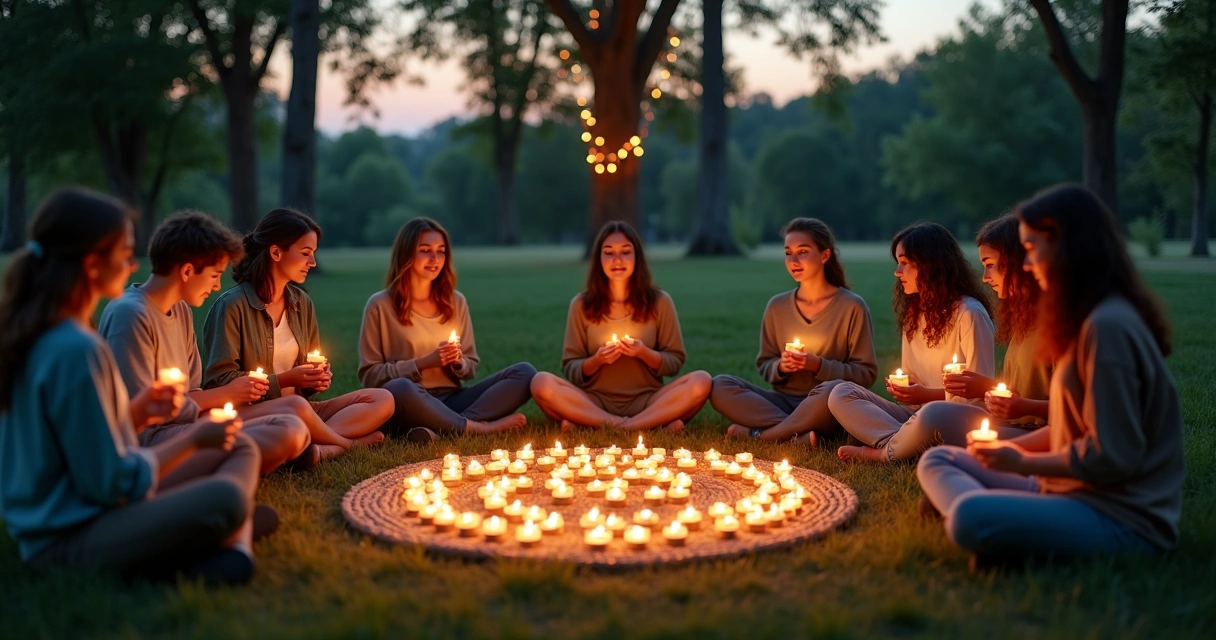
Gratitude changes tone, pace, and presence inside a group. We have seen this in families, classrooms, teams, and small circles of friends. A room can begin with tired faces and guarded silence. Then one honest word lands. Another follows. Something softens.
Collective gratitude is not forced positivity. It is a shared practice of noticing value, support, and meaning together.
This matters because gratitude grows faster when it is witnessed. It becomes less abstract and more embodied. It moves from private thought into relationship. And that shift can help a group feel safer, kinder, and more awake to one another.
There is also a practical side. Survey data on gratitude among adults in the U.S. suggests many people already feel gratitude often, which means group rituals tend to meet a human capacity that is already there. We are not creating something foreign. We are giving it form.
Why rituals work in groups
A ritual gives shape to attention. Without structure, gratitude in groups can feel vague or awkward. With structure, people know when to speak, how to listen, and what kind of reflection is welcome.
We think rituals work best when they are simple, repeatable, and emotionally honest. They should not pressure anyone to perform. They should invite presence.
Small rituals build shared memory.
Below are nine ways to cultivate gratitude inside collective circles. Some fit formal groups. Others fit home life or informal gatherings. What matters most is steadiness.
Nine rituals that help gratitude take root
Each ritual can take five to twenty minutes. You do not need all nine at once. In our experience, one or two done well can shift the quality of a whole group.
-
Opening breath and one-word check-in. Begin with three slow breaths together. Then each person offers one word for how they arrive. This clears emotional fog and helps gratitude emerge from what is real, not what sounds nice.
-
The gratitude round. Go around the circle and complete one prompt, such as “Today I am thankful for...” or “This week, someone helped me when...”. Keep it short. The strength of this ritual is rhythm.
-
Witnessed appreciation. One person thanks another person in the group for a specific action, quality, or moment. Then the receiver only says, “I receive that.” This is direct, clear, and often moving.
-
The empty chair of hidden support. Place an empty chair in the circle and name people not present who still support the group, such as teachers, elders, staff, friends, or relatives. This widens awareness beyond the visible circle.
-
Shared silence before words. Sit in silence for two minutes and ask everyone to notice one person, one lesson, and one challenge that brought growth. After silence, people speak if they wish. Quiet often deepens sincerity.
-
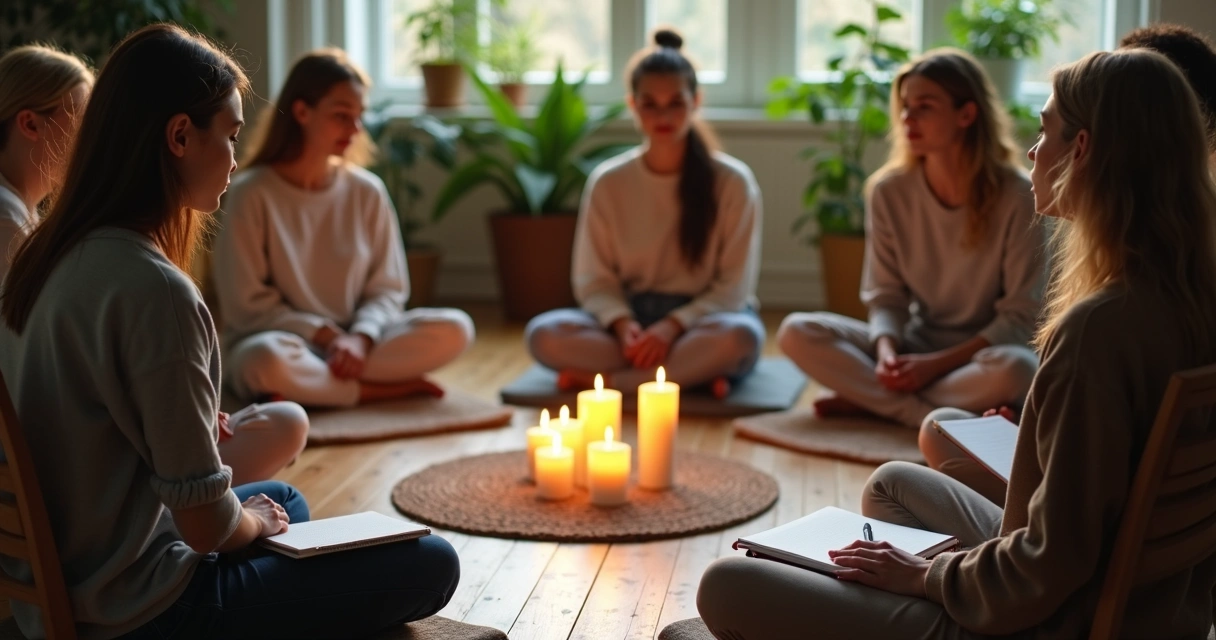
Gratitude journaling, then sharing. Give the group three minutes to write privately before anyone speaks. This helps quieter people gather their thoughts. We often notice that written reflection leads to more grounded sharing. If you want related ideas, our thoughts on rituals for emotional wellbeing expand this kind of practice.
-
Gratitude through storytelling. Invite one short story about a moment of unexpected care. We like this ritual because stories stay with people. A person may forget a list, but not the image of a friend waiting after a hard meeting or a child leaving a note on the kitchen table.
-
Circle of contribution. Ask each person to name one way they received from the group and one way they want to give back. Gratitude becomes active here. It stops being only feeling and becomes responsibility.
-
Closing blessing or intention. End with a sentence such as “May we carry this care into the week.” It can be secular or spiritual, depending on the circle. A good closing protects the tone created during the ritual.
These rituals do not need perfect language. Sometimes the simplest words are the truest.
How to make the practice feel safe
Not everyone is ready to speak about gratitude in the same way. Some people carry grief. Some feel shy in groups. Some have learned to hide appreciation because vulnerability once felt unsafe.
A gratitude circle should invite, not demand.
We suggest a few ground rules:
Let passing be allowed without explanation.
Keep shares brief so all voices fit.
Avoid correcting or judging another person’s gratitude.
Do not turn every share into advice.
Protect confidentiality when the setting asks for it.
When a group follows these simple boundaries, gratitude stops feeling performative. It becomes relational. It becomes trustworthy.
What research suggests about repeated group practice
Regularity matters. We have found that gratitude deepens when circles meet again and again, not just once during a special event. Weekly rhythm helps people notice more during daily life because they know they will return to the circle with something to share.
This is supported by group studies on structured weekly gratitude sessions, which reported gains in life satisfaction and gratitude after several weeks of guided practice. That gives a helpful frame for communities, learning spaces, and teams. Consistency shapes attention.
For circles that want a wider set of ideas, our piece on community practices for gratitude can support the next steps without making the process heavy.
Choosing the right ritual for each circle
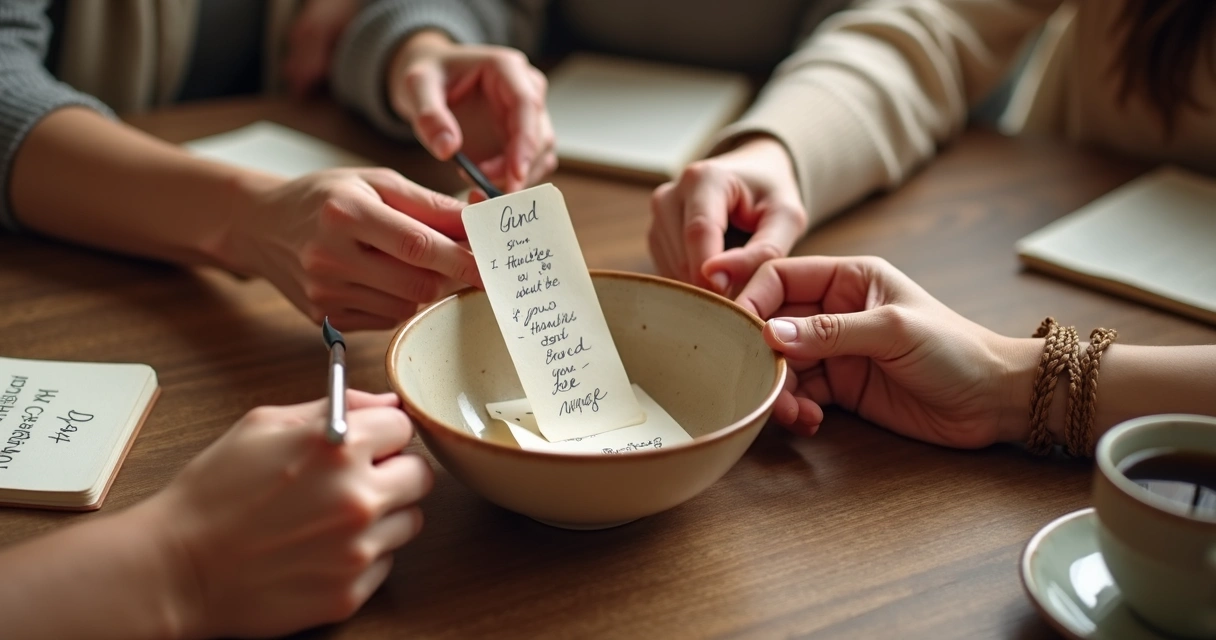
Different groups need different entry points. A family with children may do best with one sentence each. A professional team may respond well to witnessed appreciation. A healing circle may need silence first.
We usually choose based on three questions:
How much trust already exists in the group?
How much time is truly available?
Is the circle more verbal, reflective, or action-oriented?
One evening, a group may need quiet writing. Another day, it may need direct thanks between members. There is no single correct format. There is only the practice of listening to what the circle can hold.
Conclusion
Gratitude within collective circles is less about ceremony and more about shared attention. When we pause together, name support, and witness one another with care, relationships tend to become clearer and warmer. The group begins to feel like a place where meaning is not rushed.
The best gratitude ritual is the one a group can return to with honesty.
We do not need grand words. We need rhythm, respect, and room for truth. Start small. Stay steady. Let the circle teach its own pace.
Frequently asked questions
What is a collective gratitude circle?
A collective gratitude circle is a group practice in which people gather to express thanks, reflect on support, and listen to one another with care. It can happen in homes, schools, workplaces, or community spaces. The circle format helps each person feel included and heard.
How to start a gratitude ritual?
Start with a simple structure. Begin with one minute of silence or a few slow breaths, then invite each person to answer one prompt, such as “What supported me this week?” Keep the first ritual short and clear. Simplicity helps people feel at ease.
What are the benefits of group gratitude?
Group gratitude can strengthen trust, improve emotional connection, and help people notice support that might otherwise go unseen. It can also create a calmer tone in shared spaces and encourage more thoughtful communication.
How often should rituals be practiced?
Weekly practice works well for many groups because it creates continuity without feeling heavy. Some circles prefer daily micro-rituals of two or three minutes, while others meet monthly. The best rhythm is one the group can sustain with sincerity.
Can children join gratitude circles?
Yes, children can join gratitude circles when the format matches their age. Short prompts, drawing, objects, or one-sentence shares work well. Children often respond with honesty when the space feels calm and free from pressure.