Intentional breathing can be a practical way to steady yourself during everyday stress. The most useful starting point is gentle and simple: notice your breath, let the exhale soften, and stop if the exercise feels uncomfortable. This guide explains how to try it without turning relaxation into another performance task.
Key points to remember
- Choose a comfortable rhythm, not the deepest or slowest breath you can manage.
- Try a short practice and notice whether it helps in your actual situation.
- Stop if you feel dizzy, tingly, panicky, or short of breath.
- Breathing practice can support self-regulation, but it is not a substitute for professional care.
How can breathing help when stress rises?
Breathing offers a small, direct action when attention is caught in worry or tension. By noticing the breath and choosing an easy rhythm, you can give your attention a steady anchor and create a pause before responding. That pause may help you choose what to do next rather than reacting automatically.
Think of the practice as a way to meet stress, not erase it. A difficult conversation, a full workload, or uncertainty may still be present after a minute of breathing. The useful question is whether you feel a little more able to respond, not whether every uncomfortable feeling has disappeared.
People respond differently. For some, focusing inward feels settling; for others, it can intensify panic or body awareness. If that happens, open your eyes, feel your feet on the floor, and orient to the room instead. You can also explore a simple meditation routine for stress that includes attention beyond the breath.
How to try a gentle paced-breathing practice
Begin with a rhythm that feels ordinary and unforced. You do not need a special posture or a precise count, and there is no need to fill your lungs to capacity.
- Sit or stand somewhere you can pause safely. Let your shoulders and jaw soften.
- Notice a few natural breaths without trying to change them.
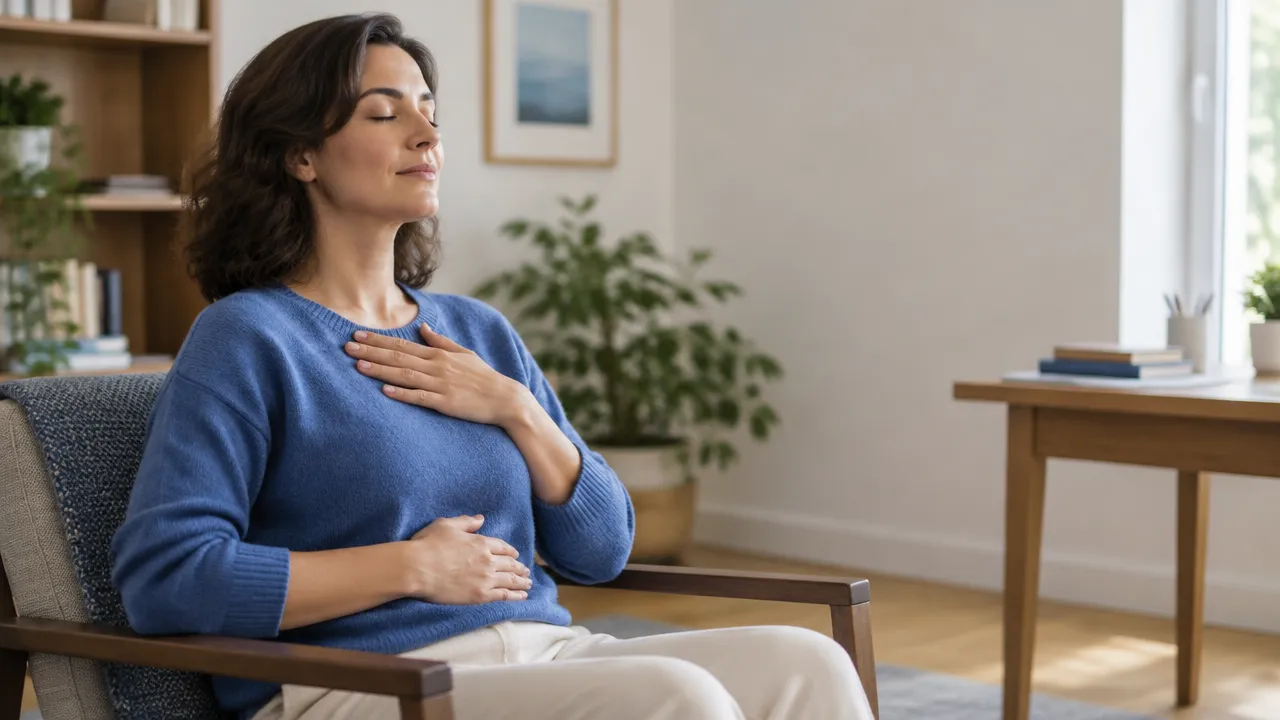
- If comfortable, breathe in gently through your nose and let the exhale last slightly longer than the inhale.
- Continue for about one minute, then return to your usual breathing and notice what changed, if anything.
If counting helps, try breathing in for three counts and out for four, adjusting the counts to keep the breath easy. Skip the count if it creates pressure. A beginner-friendly mindfulness practice for self-awareness can help you notice whether the exercise is supporting you or becoming another demand.
Why does slow breathing not feel calming for everyone?
Breath-focused attention is not universally soothing. When someone is anxious, monitoring each breath can make bodily sensations feel more prominent. Trying too hard to breathe deeply may also create discomfort. These responses do not mean you are doing it wrong; they are useful signals to change the approach.
Make the practice smaller: keep your eyes open, breathe normally, or shift attention to a neutral external detail, such as the feeling of a chair beneath you. If the discomfort continues, stop the exercise. Avoid fast, forceful breathing and long breath holds as do-it-yourself stress methods, especially if they make you feel unwell.
The NCCIH overview of relaxation techniques notes that relaxation practices are generally considered safe for healthy people, while some people may experience increased anxiety or other unwanted effects. If you have a health condition, are unsure whether a technique is suitable, or experience persistent symptoms, ask a qualified health professional for guidance.
How often should you practice?
Start with one brief, comfortable session a day, or use the technique when you notice a stressful moment. There is no universal schedule or required number of minutes. A short practice that you can repeat without strain is more useful than a demanding routine you dread.
Afterward, ask yourself: Did I feel steadier, unchanged, or more uncomfortable? That simple check helps you adapt rather than follow instructions mechanically. If breathing attention is not a fit, try grounding through sound, gentle movement, or noticing objects around you. Sustainable self-regulation depends on finding a method that respects your needs and limits.
Frequently asked questions
Does breathwork work for stress?
Yes, gentle, intentional breathing can help some people feel calmer in the moment by giving attention a steady focus and encouraging a slower breathing rhythm. It is a practical self-regulation tool, not a guaranteed fix or a substitute for care when stress is persistent or affecting daily life.
What is a simple breathing technique for stress?
Try breathing in comfortably through your nose and breathing out a little more slowly, without holding your breath. Continue for about one minute, then check how you feel. Keep the breath easy rather than unusually deep, and return to normal breathing if you feel dizzy, short of breath, or uncomfortable.
Can you overdo deep breathing?
Yes. Repeatedly forcing deep or fast breaths can make you feel lightheaded, tingly, or more unsettled. A useful practice should feel comfortable, not like a test. Stop, breathe normally, and rest if symptoms appear. Avoid vigorous techniques or prolonged breath holds without qualified guidance.
When should I stop a breathing exercise?
Pause if a breathing exercise causes dizziness, tingling, pain, air hunger, or rising panic. Avoid forceful, rapid breathing and long breath holds if you have health concerns unless a qualified clinician has advised you. For new or severe symptoms, seek medical advice rather than trying to breathe through them.
How often should I practice slow breathing?
A short practice once a day is a reasonable place to begin, and you can also use it during a stressful moment if it feels helpful. There is no required daily dose. Consistency matters less than comfort, so shorten or skip the practice when focusing on your breath feels unpleasant.