

Change is something we all seek at some point in life. Yet, so often, we start strong only to slip back into familiar patterns. We have seen this in ourselves and in those around us—new resolutions fade when life gets busy, and even deep intentions can lose power with time.
We know that lasting change is not just about willpower. It requires a way to truly anchor new behaviors, values, and states of being. One approach that has shown consistent results is the use of purposeful rituals. In our experience, when we build supportive rituals into everyday life, change becomes not only possible but sustainable and alive.
Understanding what makes a ritual purposeful
Rituals are far more than habits or routines. We often think of rituals as grand or formal actions, but in reality, purposeful rituals are conscious repetitions that connect us with intention and meaning. They mark transitions, make the invisible visible, and give us a way to embody the change we desire.
A purposeful ritual is where intention meets action, again and again.
Purposeful rituals anchor change because they:
- Transform intention into experience
- Engage mind, body, and emotion
- Create symbolic ‘containers’ for new actions
- Connect current actions to a larger sense of purpose
For us, the value of a ritual depends on its alignment with our authentic goals. When our inner world connects to outer action, change stops being just an idea and becomes a lived reality.
Why rituals matter for sustainable change
When we look at research into behavior and transformation, one thing appears clear: lasting change depends on both consistency and meaning. Many people can force themselves to act differently for a little while, but if there is no deeper meaning attached, actions often lose their power.
Purposeful rituals support change in three main ways:
- They trigger automaticity. Repeating an action at the same time and place builds neural pathways that make the new behavior feel natural.
- They invite emotional engagement. By making change meaningful, rituals link emotions to action, making us more likely to keep going.
- They reinforce identity. When we step into a ritual, we signal to ourselves and others that we are ‘someone who…’—and that new identity grows stronger over time.
Consistency forms the pathway; meaning lights the way.
How to create a purposeful ritual
Building a ritual might sound complex, but in our practice, we have found it can be simple and deeply personal. The key is to connect routine action with intention and awareness.
Here is a step-by-step process we have used to guide ourselves and others:
- Name your intention. Ask, “What do I want to change or create?” Be specific. Instead of “be healthier,” choose “walk every morning before breakfast.”
- Identify a symbolic action. Choose a small, repeatable action that represents your intention. Lighting a candle, drinking water mindfully, writing three things you are grateful for—these can all be rituals.
- Connect emotion and presence. Before or during the ritual, pause to feel a sense of purpose or meaning. Remind yourself why this action matters.
- Repeat at the same time or place. Consistency turns actions into anchors. Morning, evening, before a meal—pick a time that makes sense in your life.
- Track and adjust. Notice how you feel during and after the ritual. If something does not fit, adjust it until it feels alive and connected.
Through our own experiences and guided sessions, we have seen simple actions—done with presence—shift entire mindsets.
Examples of purposeful rituals for change
Often, the most effective rituals are simple and easy to integrate into daily life. Here are a few examples we have found meaningful:

- Morning reflection: Before engaging with phones or work, sit quietly for two minutes. Focus on how you want to feel and act today. Repeat a personal intention.
- End-of-day review: Each night, write down a lesson learned or something you are grateful for. This closes the day deliberately and sets a positive focus for tomorrow.
- Transition moments: After finishing work, wash your hands slowly and let go of the stresses of the day as you do. Enter home life with a lighter mind.
- Before tough conversations: Take three deep breaths, place a hand over your heart, and remember your main value for the discussion—whether it is kindness, courage, or clarity.
For more ideas and detailed examples, you can read about purposeful rituals that anchor lasting change.
Key elements that make rituals effective
Over time, we have noticed certain features that make rituals much more reliable. Here is what helps a ritual truly anchor change:
- Simplicity: The ritual should be short and easy to remember. Complex steps often lead to resistance.
- Symbolism: Let the ritual represent your deeper intention. Even lighting a small candle can symbolize ‘lighting the path’ for the day.
- Presence: Bring your full attention. Go through the motion consciously—not mindlessly.
- Consistency: As with any change, regularity is more powerful than intensity. Small rituals repeated are more effective than big changes attempted rarely.
- Review: Notice your reactions. If your ritual becomes stale, change it up to keep your mind and heart involved.
Meaning turns every routine into a gateway for transformation.
For those looking to deepen their practices, learning how to anchor change with rituals can be especially helpful.
Potential obstacles and how to move through them
At times, even the best intentions meet resistance. We have been there—life becomes busy, or the ritual feels empty. Expected results may seem distant.
Here is what has helped us:
- Start very small. Even a 30-second ritual, if done mindfully, builds the neural foundation for greater change.
- Reconnect to your “why”. Pause once a week and ask yourself why the change matters. Renewing meaning prevents rituals from becoming hollow.
- Share with others. Sometimes, sharing intentions or rituals with family or friends brings support and accountability, making the practice richer.
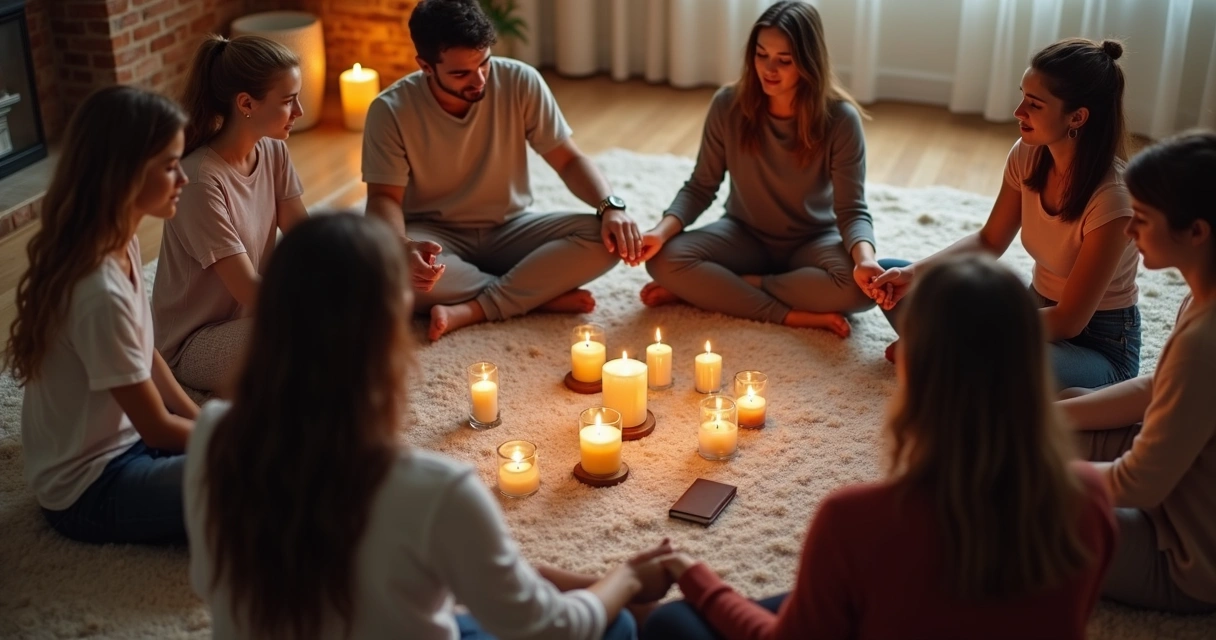
When rituals become catalysts for real growth
It is not the size or complexity of the ritual that matters most. It is the alignment between action and intention.
In our work and lives, the rituals that have had the greatest impact are those that bridge our inner world and what we do day to day. When rituals are chosen, designed, and lived with purpose, they act as stepping stones—each one a small commitment to a larger change.
Repeated intention builds inner strength.
We have learned that the journey to lasting change is made up of many small, sacred choices. Purposeful rituals can be the anchor that holds those choices in place while the waves of daily life pass by.
Conclusion
Finding lasting change is not about force, but about gentle, repeated alignment. Purposeful rituals bring rhythm, meaning, and support into transformation, making changes feel natural and sustainable. By weaving intention with action, we become not just people who wish for different lives, but people who live by choice, one mindful moment at a time.
Frequently asked questions
What is a purposeful ritual?
A purposeful ritual is a repeated action done with intention and awareness, designed to connect daily life with deeper values or goals. Unlike a habit, a ritual involves presence and often has symbolic meaning. It helps bring conscious change by making intention visible and felt in the body and mind.
How do rituals help create change?
Rituals create change by giving structure to intentions. They turn ideas into physical experiences, help form positive habits, and make new behaviors feel natural through repetition and meaning. This connection between action and purpose strengthens commitment and identity, supporting long-term transformation.
What are some easy rituals to start?
You can begin with simple rituals such as a morning breath to set the tone for the day, writing one gratitude note in the evening, or pausing to place a hand on your heart before decisions. These actions are easy and, when done consciously, start to reshape attitudes and behaviors.
How long does a ritual take to work?
The time it takes for a ritual to support change depends on how consistent and meaningful it is. Some people feel a difference after a few days, while others notice deeper shifts after several weeks or months of regular practice. The most reliable results come from steady repetition.
Is it worth it to use rituals?
Rituals offer a reliable way to anchor change and make transformations lasting. Many people find that rituals help prevent backsliding, grow self-awareness, and support positive identity shifts. If lasting change is the goal, incorporating purposeful rituals is a practice we have found very rewarding.